Green Sea Turtle
Chelonia mydas — The majestic ocean herbivore key to keeping our coastal seagrass meadows healthy and thriving.
Overview
Unlike its name suggests, the shell of a Green sea turtle is actually olive-brown to black, not green. They get their unique name from the greenish color of their internal cartilage and body fat, which is stained by their strictly vegetarian diet of marine algae and seagrasses as adults.
Growing much larger than Olive Ridleys or Hawksbills, Green turtles are among the largest sea turtles in the world. Sri Lanka's southern coasts, especially Rekawa and Koggala, serve as critical nesting sites for these giants, where massive females crawl up the beaches at night to lay hundreds of eggs.
Major Threats
Green sea turtles face numerous dangers in modern oceans, primarily driven by human commercial developments and illegal harvesting:
- Poaching for Meat & Eggs: Sadly, Green turtles are still illegally targeted by poachers for their meat and eggs in some coastal areas.
- Coastal Development: Bright lights from beachfront hotels and restaurants disorient nesting mothers and confuse tiny hatchlings trying to find the ocean.
- Loss of Seagrass Habitats: Pollution and bottom trawling damage the crucial coastal seagrass beds where these turtles feed.
 An adult Green turtle grazing along a lush coastal reef floor.
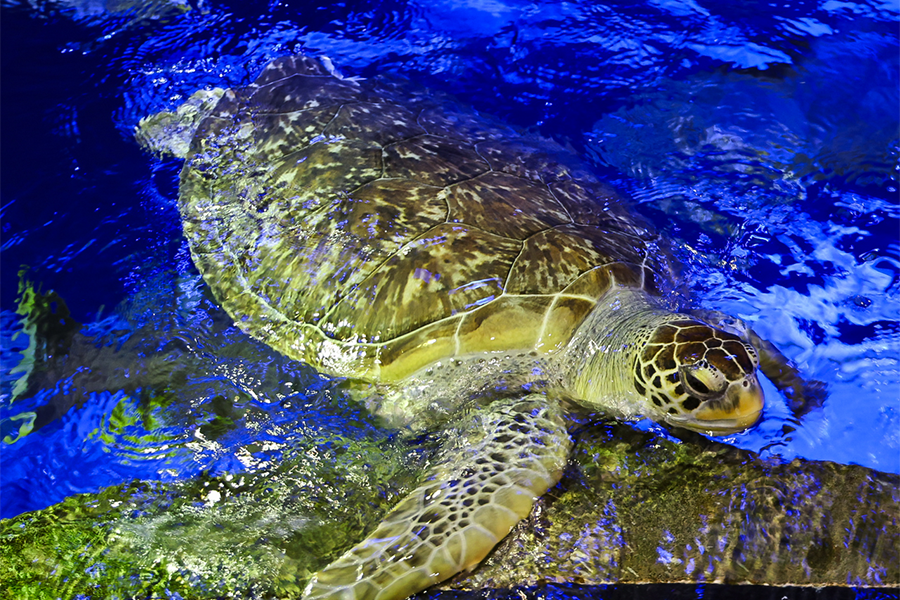 Notice the beautifully smooth carapace typical of adult Green turtles.
Our Conservation Efforts at Koggala
At our Koggala facility, Green sea turtles are a regular and vital part of our operational routine. Because their nests contain a high volume of eggs, we carefully collect and protect them in our strictly monitored nursery sandbox to guarantee maximum hatch rates away from natural crabs, birds, and beach poachers.
We also manage dedicated treatment enclosures for large Green turtles suffering from "floating syndrome"—a condition caused by swallowing ocean plastics where trapped gas prevents them from diving down to feed, requiring intensive long-term rehabilitation before release.
Protect Our Seagrasses
Rehabilitating large adult Green turtles requires significant tank filtering resources. Help support their daily clinical diets.
Support Rehabilitation